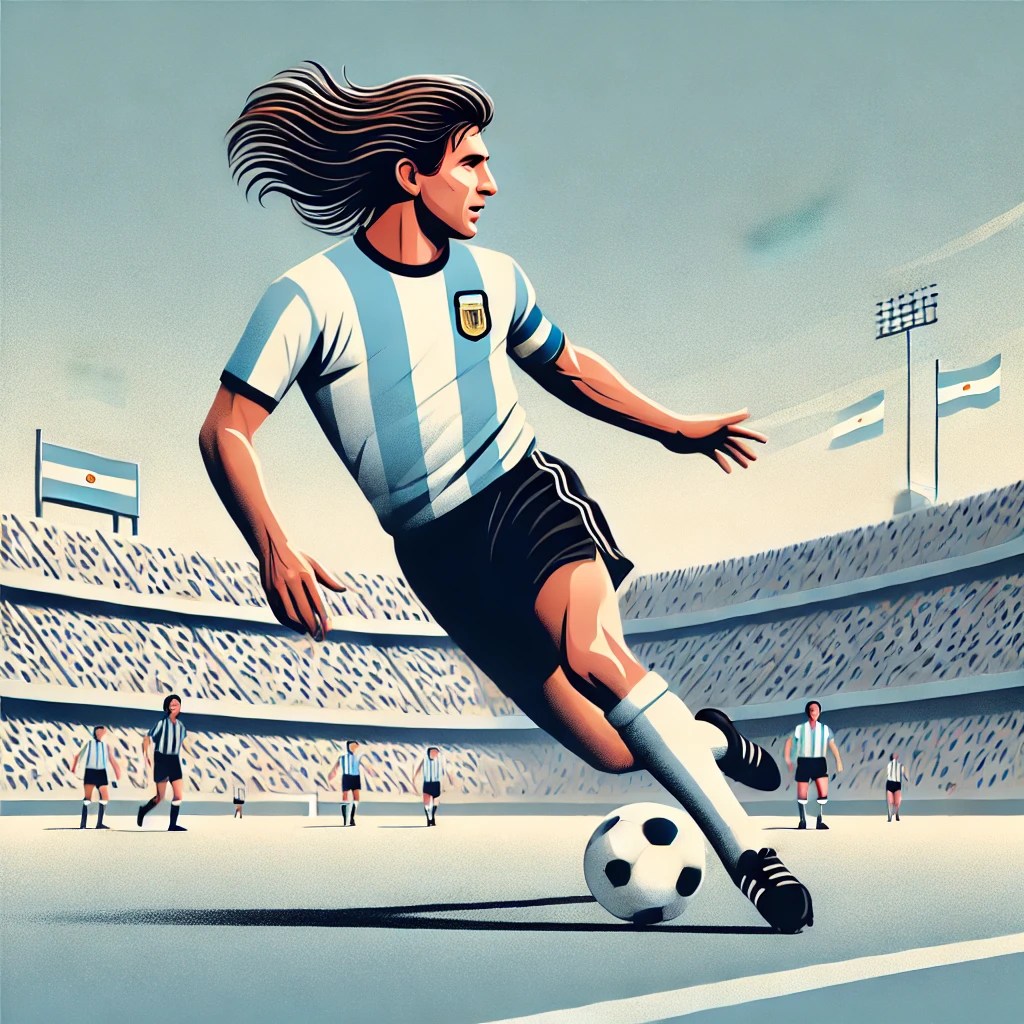
That hot summer of 1998
The first world cup that I can remember watching is France, 1998. I have some fuzzy memories from 1994, but that strictly involves crying for the banned Maradona. Any matches- cannot really tell. I must have seen the matches, it’s just that I do not have any recollection of it.
France, 1998- I do remember. It was a particularly hot summer in Bangladesh. The power would cut off too frequently, disrupting the match viewing. We, in our little neighbourhood, would climb to the flat roof of our buildings to cope with the heat. I can vividly remember that one particular Argentina match was also disrupted by the power cut. The wait was excruciating!
In that hot summer of 1998 is when I saw Gabriel Batistuta play for the first time. Any fourth grader (including ’98 me) could tell he was our main man. As an ardent Argentina fan, I immediately fell in love with the long-haired, dreamy eyed, herculesque striker. This is the story of Gabriel Omar Batistuta, who made us believe that we could win the world cup (again) without Diego.
Back story of Omar (forgotten middle name)
The God, Diego Maradona, himself proclaimed about Batistuta, “the greatest goal scorer that I saw in my life”. So where did it all begin?
“The greatest goal scorer that I saw in my life”- Diego Maradona on Gabriel Batistuta
Batistuta’s story started in Avellaneda, Santa Fe (Argentina), though he spent his forming years in nearby Reconquista. As a kid, he was into sports, not just football, but I can bet he was damn good at it. His eyes would be fixated on football, like many others around him, when Argentina had finally won the World Cup trophy in home soil.
Bati was picked up by the local Reconquista team that won a match playing against Newell’s Old Boys (aka Messi’s boyhood club). He showed a glimpse of his talents by netting a brace, and that was enough to come under the radar of meticulous Marcelo Bielsa, who was managing the Old Boys back then. Batistuta actually considers Bielsa as one of his greatest mentors.
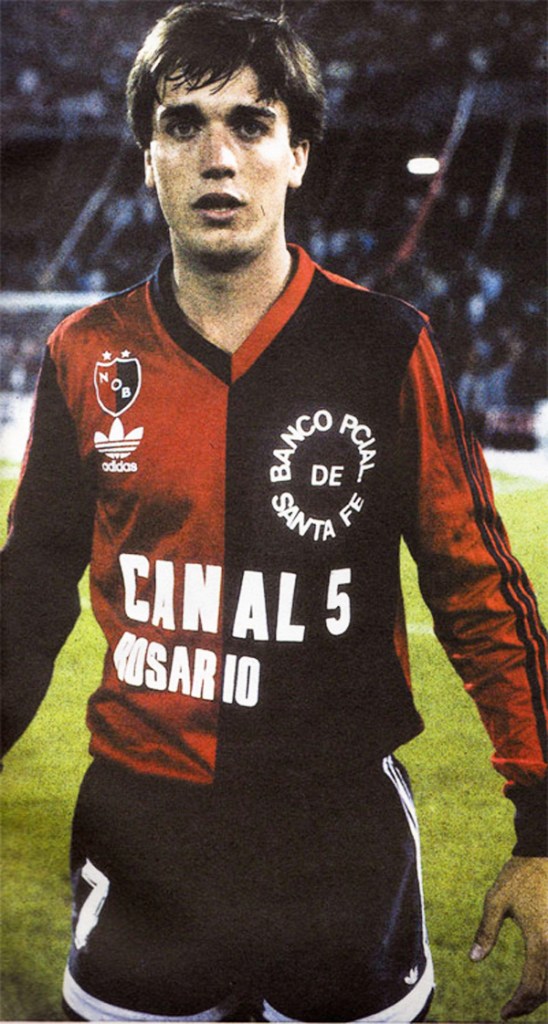
Batistuta later mentioned how difficult it was to crack the first team for him. Thankfully, he did crack it open. From NOB, he then went on and player for both River and Boca, the eternal rivals. He was more effective for the latter though, as he found his footing at La Bombonera under the guidance of Óscar Tabárez, El Maestro from Uruguay.
He was then called for the La Albiceleste in Copa America (1991). Batistuta was phenomenal in that tournament, scoring six goals. Argentina also took home another silverware. So impressive was he that Europe came calling and Batistuta could not refuse. He joined Fiorentina right after winning the Copa ’91.
The legend of Batigoal
Batistuta became Batigoal in Florence, Italy. In his first season, Bati already showed promise by scoring 13 goals for La Viola. Next season, he netted 16 for the Serie A side. Fiorentina could not survive the relegation battle unfortunately, even after the Argentine’s heroics. Most of the top players in today’s world would switch to a team of the first division. But Batistuta showed his loyalty for the Violets by playing in Serie B- the second division in Italy! Imagine one of world’s best emerging strikers playing in there!
Batistuta’s prowess alleviated Fiorentina to Seria A in the season after by scoring another 16 goals under coach Claudio Ranieri. Fiorentina was back in the best football league of that time (Yes, that’s right EPL!). Coming back to Serie A, he outdone his previous years, netting 26 league goals and having his first Capocannoniere (the first Argentine to do that after Diego).
Fiorentina collectively was not up there against the likes of AC Milan or Juventus who were dominating the league. Fiorentina ended on fourth position in 1995-96 season, securing a spot to play the UEFA Cup (Champions League now). But first, they will be winning the Coppa Italia with memorable performances from Batistuta. I can highly recommend watching Batistuta’s goals against Inter Milan, specially the one on the second leg of the semi-finals. It’s a thing of beauty! He was highly influential in the Final against Atalanta as well. Finally, after 20 years, La Viola won something!
With Fiorentina, Batistuta would come agonisingly close to the titles he desired, but would never achieve it for them. He had sporadic but brilliant performances against giants like Arsenal, Manchester United in the Champions League. But nothing more than that. After nine seasons, he finally said goodbye to his beloved club and joined AS Roma! His transfer to Roma at that time involved the highest transfer fee for a player aged over 30.
On 17 June, 2001, Batistuta sealed a victory for Roma against Perma and also won his first Scudetto!
How to be successful like Gabriel Batistuta
Batistuta played like a human who got transformed into a beast as soon as the whistle blew. The beast’s unquenched thirst for goals drove him crazy. The beast unleashed itself, exerted brut force on that round thing and it turned into a ball of fire; it might very well tear apart everything on its way. But when the whistle blew again, indicating it’s over (for now), the beast would get back to its usual shape, the human Batistuta. All these years of playing, with injuries here and there, Batistuta’s beasty body had to cave in at some point.
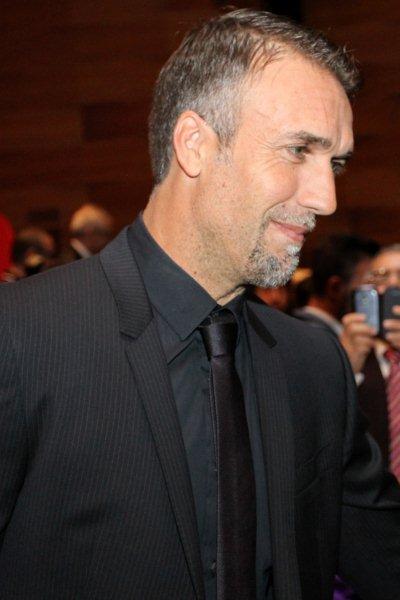
On a TEDx talk, the man himself talked about his struggles and how his three values have kept him going. The speech may very well be given by Tony Robbins in Spanish. But it was the man himself, so I had to listen to his words carefully. The three principles for Batistuta were: having a clear objective, humility and discipline. Through out the talk, he would provide examples from his illustrious career where these principles were put into work.
If you are bragging about a three-days seminar you just finished in your leisure time, listen to this man, how the World’s Best Striker (Ronaldo R9 may disagree) put the team before himself. Be it cutting his silky long hair for the team (I for one cannot think Batistuta without the long hairs!) , or giving captain’s armband to young Totti, he always had a clear mind. The objective was to score loads of jaw dropping goals and help the team win the cup/championship.
Batistuta in the talk, in a slow sad voice whispered in Spanish. The auto-translate got me this far to give you the key idea:
“It is not too long before (two weeks before), I returned from Europe, where I went to have an ankle prosthesis done. I had pain everyday in my ankle. It’s PAIN in capital letters. It’s that sort of a pain when you think if you can even walk to the bathroom.”
He gave this speech 16 years after his retirement!
So much was the pain that the Batistuta at some point asked the doctors to cut his leg off. But he did not stop even with the pain (not sure if that would be a good advice). He kept on having a go. During his earlier spell at River Plate, the coach did not want to play him. He said and I am taking notes with Auto-translate-
“For six months, I would train and then I cannot play. I thought about going back to Rosario. But I could not let up. I had to keep on trying. This is what I call mental discipline. Discipline that never allowed me to give up, that allowed me to keep my ego in the right place. To have the larger goal in mind.”
Damn!
And, I fully felt for this poor guy. It probably shows how he was used up during his time. We also hear the same debate now, that the players are asked to play so many games without considering their physical and mental well-being.
The legacy
How should Batistuta be remembered? What’s his legacy? Well, for a millennial who is a die-hard Argentina fan, the answer is simple. He is an Argentine football legend and perhaps the greatest goal scorer for the Albiceleste. Also a Fiorentina and Serie A legend who will be remembered fondly by Italy. For the generations after that, I can only suggest to go to YouTube where you can see glimpses of the deadliest striker Argentina has ever produced.
Resources used:
- Argentine great Gabriel Batistuta in negotiations with US club for coaching job, MLSSoccer.com, 2021.
- Gabriel Batistuta’s Arabian adventure, Thesefootballtimes.co, 2015.
- Gabriel Batistuta: the textbook finisher whose goals made us dream, Thesefootballtimes.co, 2018.
- Gabriel Batistuta: the legend of the goal, Radio Perfil, 2024.
- Gabriel Batistuta: The Fiorentina Diaries, Thesefootballtimes.co, 2019.
- Gabriel Batistuta Interview, WorldSoccer, 2010.
- Gabriel Batistuta at 50: celebrating seven of his greatest goals, Guardian Sport Network, 2019.
- Gabriel Batistuta, FourFourTwo, 2010.
- Gabriel Batistuta Retired footballer, aged 46, Esquire Middle East – The Region’s Best Men’s Magazine, 2015.
- Gabriel Batistuta, Wikipedia.
- Don’t Cry For Me, Batistuta, The New York Times, 2002.
- El poder de la disciplina, TEDxEstaciónEwald (https://www.youtube.com/watch?v=R7wUI2hAgvU).
Photo sources:
- Conceptual illustration with guidance from ChatGPT.
- By Terra – http://www.somosleprosos.com.ar/batigol_con_argentina-fotos_de_newell_s_old_boys-igfpo-5349621.htm, Public Domain, https://commons.wikimedia.org/w/index.php?curid=38890956
- By Roberto Vicario – Roberto Vicario, CC BY-SA 3.0, https://commons.wikimedia.org/w/index.php?curid=36049874
 Albiceleste Stories
Leave a comment